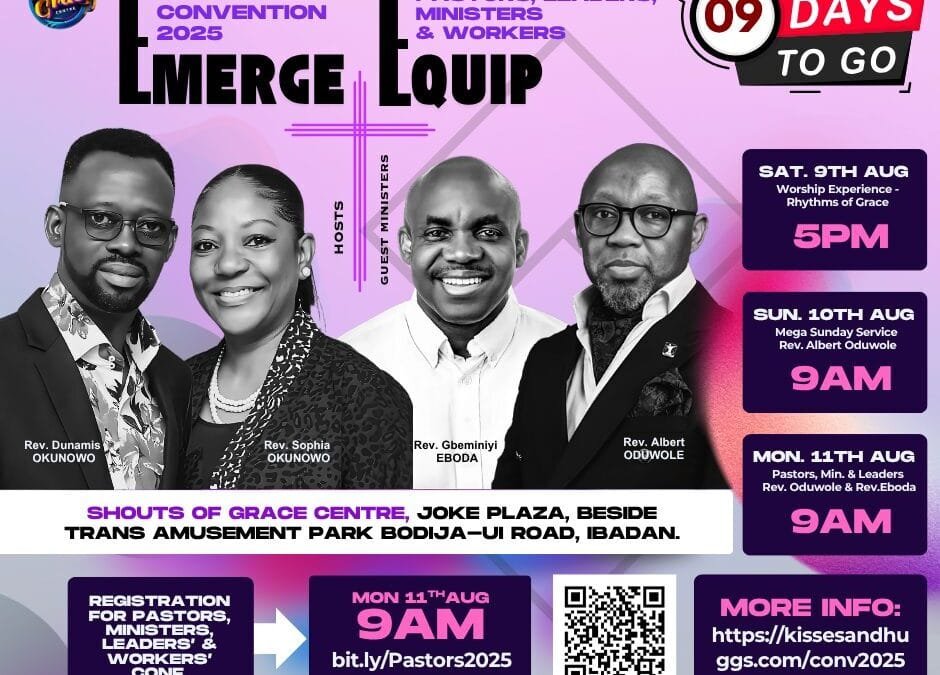
Are you a minister, pastor, church worker, or leader, and you live in Ibadan? You are cordially invited to “Equip” a Minister’s Conference with Rev Femi Oduwole and Rev Gbeminiyi Eboda as part of our 9th anniversary convention.
Rev Dunamis and Sophia Okunowo will also be hosting us. Attendance is free, but registration is required. Kindly register on this link – https://kissesandhuggs.com/conv2025
Don’t miss it. Spread the word!
Choosing a life partner is one of the most significant decisions you’ll ever make. This person will walk beside you through joys and trials, share your dreams, and help shape the legacy you leave behind. But this decision shouldn’t rest solely on human wisdom or fleeting emotions—it must be guided by God’s direction and design. Here’s how to discern who your life partner is with God at the center of the process.
1. Surrender Your Desires to God
Before seeking a spouse, surrender your desires and expectations to the Lord. Often, our vision for “the perfect partner” is shaped by societal standards, past experiences, or unmet needs. However, Psalm 37:4 reminds us, “Delight yourself in the Lord, and He will give you the desires of your heart.” When you delight in God above all else, He aligns your heart with His plan, replacing selfish ambitions with godly priorities.
Pray and ask God to reveal His will for your future spouse. Trust that His timing and choice are far better than anything you could orchestrate on your own.
2. Seek Wisdom and Discernment
God promises wisdom to those who ask (James 1:5), so seek His guidance as you navigate relationships. Look beyond surface-level attractions and evaluate character, values, and spiritual maturity. Proverbs 18:22 says, “He who finds a wife finds what is good and receives favor from the Lord.” Notice the emphasis on finding someone who reflects goodness—a reflection of God’s nature.
Ask yourself: Does this person exhibit fruit of the Spirit (Galatians 5:22-23)? Are they committed to growing closer to God? Do they honor others and demonstrate integrity? These qualities matter far more than external appearances or temporary chemistry.
3. Set Boundaries and Standards Based on Scripture
As you wait for God’s leading, establish clear boundaries and non-negotiable standards rooted in Scripture. For example:
A shared faith in Christ (2 Corinthians 6:14)
A commitment to purity and holiness (1 Thessalonians 4:3-5)
Alignment in core values like family, finances, and ministry
Boundaries protect your heart and ensure you don’t settle for less than God’s best. Remember, compromise on foundational principles can lead to long-term struggles in marriage.
4. Involve Godly Counsel
Proverbs 11:14 states, “Where there is no guidance, a people falls, but in an abundance of counselors, there is safety.” Surround yourself with trusted mentors, pastors, or spiritually mature friends who can provide objective insight into potential partners. They can help identify red flags you might overlook due to emotions or infatuation.
Additionally, observe how the person interacts with their family, friends, and community. Their behavior outside of your relationship reveals much about their true character.
5. Trust God’s Timing
Patience is key when deciding who your life partner is. It’s easy to feel pressured by cultural timelines or comparisons with others, but Ecclesiastes 3:1 assures us, “There is a time for everything, and a season for every activity under the heavens.” Rushing into a relationship without divine confirmation can lead to heartache, while waiting on God ensures alignment with His purpose.
While you wait, focus on becoming the kind of person you hope to marry. Use this season to deepen your relationship with God, serve others, and grow in wisdom and maturity.
Deciding who your life partner is isn’t just about choosing someone—it’s about allowing God to guide you to the right person at the right time. Keep Him at the forefront of your search, trusting that He knows what’s best for you. As you pray, seek wise counsel, and set godly standards, rest assured that He will lead you to a partner who complements your journey and shares your commitment to glorify Him.
Remember, marriage is not only a union between two people—it’s a covenant involving God Himself. Let your decision reflect reverence for His design and dependence on His direction. With faith and obedience, you’ll find the joy and fulfillment that come from partnering with both God and the person He has chosen for you.
Proverbs 19:14 concludes, “Houses and wealth are inherited from parents, but a prudent wife is from the Lord.” Trust that your life partner is a gift from Him—and trust in His perfect timing to bring it to pass.
When considering a potential wife, aligning core values and beliefs is paramount. These shared principles are the foundation of a long-lasting and fulfilling relationship, often determining the harmony and direction of the partnership. Core values are essentially the deep-seated principles that guide an individual’s actions and decisions. They encompass areas such as religious beliefs, ethical standpoints, family values, and life goals.
Religious beliefs play a significant role in many people’s lives, influencing their traditions, practices, and worldviews. A couple with similar religious convictions typically find it easier to navigate decisions regarding worship, religious ceremonies, and the upbringing of children. Conversely, differing religious affiliations can be a source of tension, especially when these differences are deeply ingrained and impact daily living.
Ethical standpoints also hold considerable weight. These are the moral principles that guide what an individual deems right or wrong. Couples who share similar ethical views are more likely to agree on critical issues such as honesty, integrity, and social responsibility. For instance, if one partner values transparency while the other practices secrecy, conflicts may arise, eroding trust and respect over time.
Family values, including the importance placed on family bonds, traditions, and responsibilities, are another crucial consideration. Partners who prioritize family in similar ways can harmoniously plan gatherings, handle familial conflicts, and support each other in family obligations. A mismatch in this area can lead to disagreements about the time devoted to extended family, parental responsibilities, and even financial priorities.
Finally, shared life goals are essential for a couple’s future planning. Whether it’s career ambitions, lifestyle choices, or financial aspirations, having a common vision ensures that both partners are working towards the same objectives. For example, if one dreams of a nomadic lifestyle while the other desires stability, compromise becomes challenging and dissatisfaction inevitable.
In summary, aligned core values and beliefs foster a supportive and understanding relationship. They serve as a guiding light during challenges and as a shared platform for celebrating successes, ultimately strengthening the bond between partners.
Emotional Intelligence and Communication
Emotional intelligence (EQ) is a pivotal trait to consider in a prospective wife as it profoundly influences relationship dynamics. Emotional intelligence encompasses several key attributes including empathy, self-awareness, and emotional regulation. These traits facilitate a deeper understanding between partners, helping to navigate the complexities of married life.
Empathy, the ability to understand and share the feelings of another, is fundamental in a relationship. A woman who demonstrates empathy not only provides emotional support but also fosters an environment where both partners feel heard and valued. This creates a foundation for mutual respect and understanding, critical components of a lasting marriage.
Self-awareness is another essential aspect of emotional intelligence. A self-aware individual is capable of recognizing their own emotions and how they affect their behavior and interactions with others. This awareness extends to understanding their partner’s emotions, leading to more thoughtful and considerate responses during interactions.
Emotional regulation, or the ability to manage one’s emotions in a healthy way, can significantly impact a couple’s ability to resolve conflicts. A prospective wife who can maintain calm and composure in stressful situations contributes to a stable and harmonious home environment. This trait is particularly valuable in long-term commitments where challenges are inevitable.
Effective communication is intertwined with emotional intelligence. It involves not only expressing one’s thoughts and feelings clearly but also actively listening to the partner. Effective communicators can navigate conflicts more efficiently, ensuring that misunderstandings are minimized and that both partners feel understood.
Observing these traits in a prospective wife can involve paying attention to how she handles disagreements, her response to stressful situations, and her ability to express emotions constructively. Real-life scenarios, such as her interactions with family and friends, can provide insights into her emotional intelligence and communication skills.
In essence, a woman who exhibits strong emotional intelligence and communication skills is likely to contribute positively to the relationship, fostering emotional intimacy and resilience in the face of life’s challenges.
Compatibility and Shared Interests
Compatibility and shared interests form the bedrock of a thriving marriage. When seeking a prospective wife, assessing these elements can forecast the longevity and quality of the relationship. Marriages where partners share common hobbies, compatible lifestyle choices, and intellectual synergy often thrive on mutual enjoyment and support.
Similar hobbies provide a platform for shared experiences and quality time spent together. Activities like hiking, cooking, or reading not only foster closeness but also reduce stress and invigorate companionship. Engaging in joint activities can help partners understand each other’s strengths, weaknesses, and preferences, thereby nurturing a robust bond.
Aligning lifestyle choices is equally vital. Whether it’s preferences around fitness, dietary habits, or social engagements, having congruent lifestyles minimizes friction and enhances daily interactions. For instance, if both partners value a healthy lifestyle, they are more likely to support each other’s wellness goals, thus encouraging mutual growth.
Intellectual compatibility adds another layer of depth to a relationship. Engaging in meaningful conversations, debating ideas, or sharing intellectual pursuits can provide endless topics for discussion, keeping the relationship dynamic and mentally stimulating. Intellectual compatibility allows couples to admire and respect each other’s perspectives, establishing a foundation of mutual respect.
It is crucial to identify and cultivate shared interests. Couples can explore new activities together to find common ground, thereby expanding their shared repertoire. From taking cooking classes together to signing up for book clubs, jointly exploring new areas can strengthen the relationship.
One must also recognize the importance of maintaining individual passions. While shared activities are crucial, having separate hobbies allows for personal growth and prevents the relationship from becoming too insular. Striking a balance between togetherness and individuality ensures a well-rounded and healthy relationship.
In the realm of marriage, it is inspiring to look at stories of couples who have successfully navigated both similarities and differences in their interests. For example, a couple who shares a love for travel might revel in planning adventures together, while another where one partner loves reading and the other is passionate about sports might find joy in exploring each other’s worlds. Such stories highlight that while shared interests are invaluable, embracing and respecting individual passions can also enrich the partnership.
Commitment and Future Plans
When selecting a prospective wife, the significance of a shared vision for the future cannot be understated. A unified outlook facilitates a seamless path forward and ensures both partners are heading in the same direction. One essential element is openly discussing career aspirations. It’s crucial to understand each other’s professional targets, whether they encompass ambitions for career growth, starting a business, or achieving work-life balance. This transparency can preempt potential conflicts and harmonize long-term career plans.
Equally pivotal is the topic of family planning. Couples should discuss their desires regarding children—when to have them, how many to have, and their parenting styles. Aligning these aspects early establishes a foundation for a cohesive family life. Financial outlooks also demand attention. Evaluating each other’s attitudes toward saving, spending, and investing is integral to formulating a concrete economic plan. Financial compatibility can significantly reduce stress and foster a stable household.
Commitment lies at the heart of any enduring relationship. A future wife’s readiness to work through challenges and resolve conflicts is indicative of this trait. It’s beneficial to have conversations about dealing with potential life setbacks, as they shed light on each other’s problem-solving skills and resilience. Assessing a partner’s long-term commitment involves observations of their reliability, consistency, and dedication to mutual goals.
In gauging a partner’s readiness to build a future together, pay attention to their willingness to plan and make decisions collectively. Participating in activities that require joint decision-making, such as planning a trip or managing joint finances, can provide insights into their commitment level. Ultimately, a shared vision for the future, combined with mutual commitment and the ability to navigate life’s adversities together, forms the backbone of a thriving marital relationship.