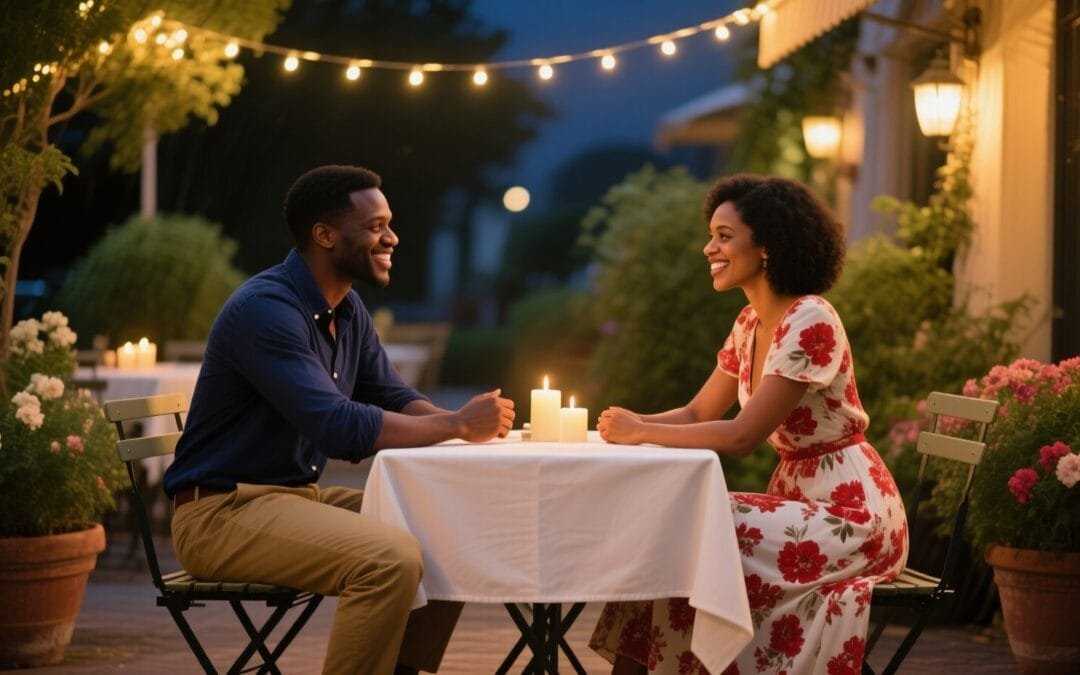
Not every marriage ends with a big fight. Sometimes it ends with silence.
There was once a couple who didn’t argue much. No raised voices, no plates broken. But slowly, they stopped talking about their dreams. They only spoke about bills, children’s school runs, and whose turn it was to do the chores. Years passed, and one morning they looked at each other and realised—they were strangers living under the same roof.
My dear singles, you don’t want a relationship where there’s no conflict simply because there’s no depth.
Better pay attention now—or you will pay dearly tomorrow.
Does the person you’re with ask about your dreams, your fears, your calling? Or do they only skim the surface—what you ate, what you wore, where you went? If they can’t open up emotionally now, marriage won’t magically fix it.
Couples, silent drift begins when you stop being curious about each other. You used to talk for hours. Now you only exchange schedules. You used to pray together. Now you scroll your phones in silence.
But remember: intimacy is not automatic; it has to be nurtured.
Break the silence. Ask questions again:
“How are you—really?”
“What’s been on your heart lately?”
“What are you dreaming about these days?”
Sometimes the spark returns simply because you took the time to listen deeply.
Proverbs 20:5 “The purposes of a person’s heart are deep waters, but one who has insight draws them out.”
Draw your spouse out. Draw your friend out. Don’t let silence swallow your love.
Love rarely dies loudly—it dies quietly, when we stop talking. Don’t let that be your story.
Why do some couples act like teammates, while others act like opponents?
Marriage was never designed to be a scoreboard. Yet too many homes sound like this:
“I did the dishes, so you owe me.”
“I work harder, so my voice should matter more.”
“I prayed more, so I’m more spiritual.”
Singles, kindly pay attention now. If the person you’re dating always has to “win,” they’ll treat marriage like a battle, not a partnership. Marriage is not about who shouts louder, earns more, or sacrifices the most. It’s about carrying destiny together, side by side.
Couples, remember—you’re not enemies. You’re allies. If you treat your home like a competition, someone always ends up defeated. But if you treat your home like a partnership, both of you win. That’s why Scripture says,
“Two are better than one, because they have a good reward for their labour” (Ecclesiastes 4:9).
The goal is not to outshine but to out-serve one another.
So stop competing over who did more yesterday. Celebrate each other’s efforts today. Say “thank you” for the small things. If one person cooks and the other cleans, that’s not weakness—it’s teamwork. If one spouse earns more money and the other manages the home, both are building a legacy together.
Singles, don’t look for someone who only wants to be impressive. Look for someone who wants to be cooperative. Marriage isn’t about scoring points; it’s about scoring purpose.
At the end of the day, love is not “me versus you.” It is “us versus life.” And when couples get that right, they stop keeping score and start building together.
Children are a blessing from God. They bring joy, laughter, and a sense of legacy. But… Ehm… children also bring stress, sleepless nights, financial pressure, and less time for romance. And many couples love their kids but quietly lose each other in the process.
But here’s a reminder:
Marriage is the first covenant, parenting comes after. If you neglect your marriage while raising kids, you’ll one day look across the table—after the children are grown—and see a stranger. That’s why wise couples learn to guard their love even in the chaos of parenting.
For singles, hear this: don’t just ask, “Will this person be a good spouse?” Ask, “Will this person be a good parent—and will they still choose me when kids come?” A person who doesn’t know how to balance love and responsibility will either pour everything into the children and starve the marriage, or neglect the children chasing their own freedom. Neither is healthy.
If you’re married already, learn this: your children need a healthy marriage more than they need perfect parents. Yes! So, SHOW them what love looks like by loving each other openly. Go on dates, hold hands, talk beyond school runs and house chores. Let your kids see that before “Mum and Dad,” you were “husband and wife.”
Parenting works best when love in marriage remains the anchor. Children thrive in homes where security is not only provided by rules and routines, but also by affection and unity.
So, whether you are single or married, prepare yourself. A family is not just about raising children—it’s about building love that can raise children well.
When Love Feels Dry: Choosing Commitment Over Emotion
Let’s be honest—love doesn’t always feel like “butterflies in your belly”. There are days in marriage when your spouse gets on your last nerve. There are seasons in dating when the person you thought was perfect suddenly looks very human.
Feelings are wonderful, but they are not stable. They rise and fall like waves. If you build a relationship only on how you feel, you will walk away the moment emotions dry up.
That’s why love is more than a feeling—it’s a decision. Real love chooses. It chooses to stay when the spark is faint. It chooses to forgive when hurt creeps in. It chooses to serve when selfishness feels easier.
Singles, don’t just look for someone who excites you today. Look for someone who can choose you tomorrow, even when you’re not easy to love. Ask yourself: Does this person have the strength of commitment? Do they know how to stand when life tests love?
Married couples, remember this: passion is beautiful, but partnership keeps you. Don’t wait for feelings to lead before you act in love. Don’t wait to feel like before you submit. Speak kindly even when you’re frustrated. Do the small things—help with chores, listen without interrupting, pray together. Those are choices that even reignite the feelings.
Commitment is what carries love through seasons. When the excitement dips, let choices lead. Because feelings follow actions, not the other way around.
A strong relationship is not one that never feels dry—it’s one that refuses to give up when it does.
P.S.: Singles, if your relationship is toxic, do well to run far from it o… lol
Life has a way of swallowing up our best intentions. Between deadlines, responsibilities, and unexpected curveballs, passion can quietly slip into the background. Not because love is gone, but because busyness has a way of pushing connection to the side.
Whether you’re married or preparing for marriage, here’s the truth: passion isn’t self-sustaining — it’s like a fire. If you don’t feed it, it fades.
Here are some steps to keeping passion alive:
1. Make time, don’t just wait for it.
Schedule date nights, walks, or even ten minutes of undistracted conversation if you’re married. If you’re single, start practising intentionality in your friendships and courtship. You won’t “find time” later if you don’t learn to make time now.
2. Keep the playfulness alive.
Married? Send a light, affectionate message or give a warm compliment. Single? Learn to keep joy and humour alive in your interactions — it keeps relationships fresh and enjoyable.
Playfulness says, “I still choose you” (or “I’m glad I’m getting to know you”).
3. Share more than tasks.
Married couples can get stuck in to-do list mode. Singles in courtship can get stuck in “just the facts” mode.
Either way, connection grows when you share your dreams, fears, and funny little stories. Emotional intimacy fuels every other kind of intimacy.
4. Touch more.
If you’re married, small touches — holding hands, a hug in the kitchen — keep the bond alive. If you’re single, you can’t “practise” this physically, but you can practise warmth and kindness in your body language and expressions.
5. Protect your special space.
For married couples, your bedroom should feel like a sanctuary, not a storage room. For singles, your personal space (home, desk, car) should reflect peace and care. The way you treat your space impacts how you treat relationships.
6. Pray together.
Married couples can pray as one before God. Singles can pray together as friends or in courtship, building spiritual intimacy the right way. Prayer aligns hearts and keeps relationships God-centred.
7. Keep learning each other.
Married? Your spouse will change over time — stay curious. Single? Keep asking questions and discovering new layers about the person you’re getting to know. Relationships thrive when you keep exploring.
Passion doesn’t vanish overnight — it fades slowly from neglect. Whether you’re building a relationship or nurturing a marriage, choose to feed it deliberately.
Love may be a gift from God, but keeping it vibrant is a daily choice.